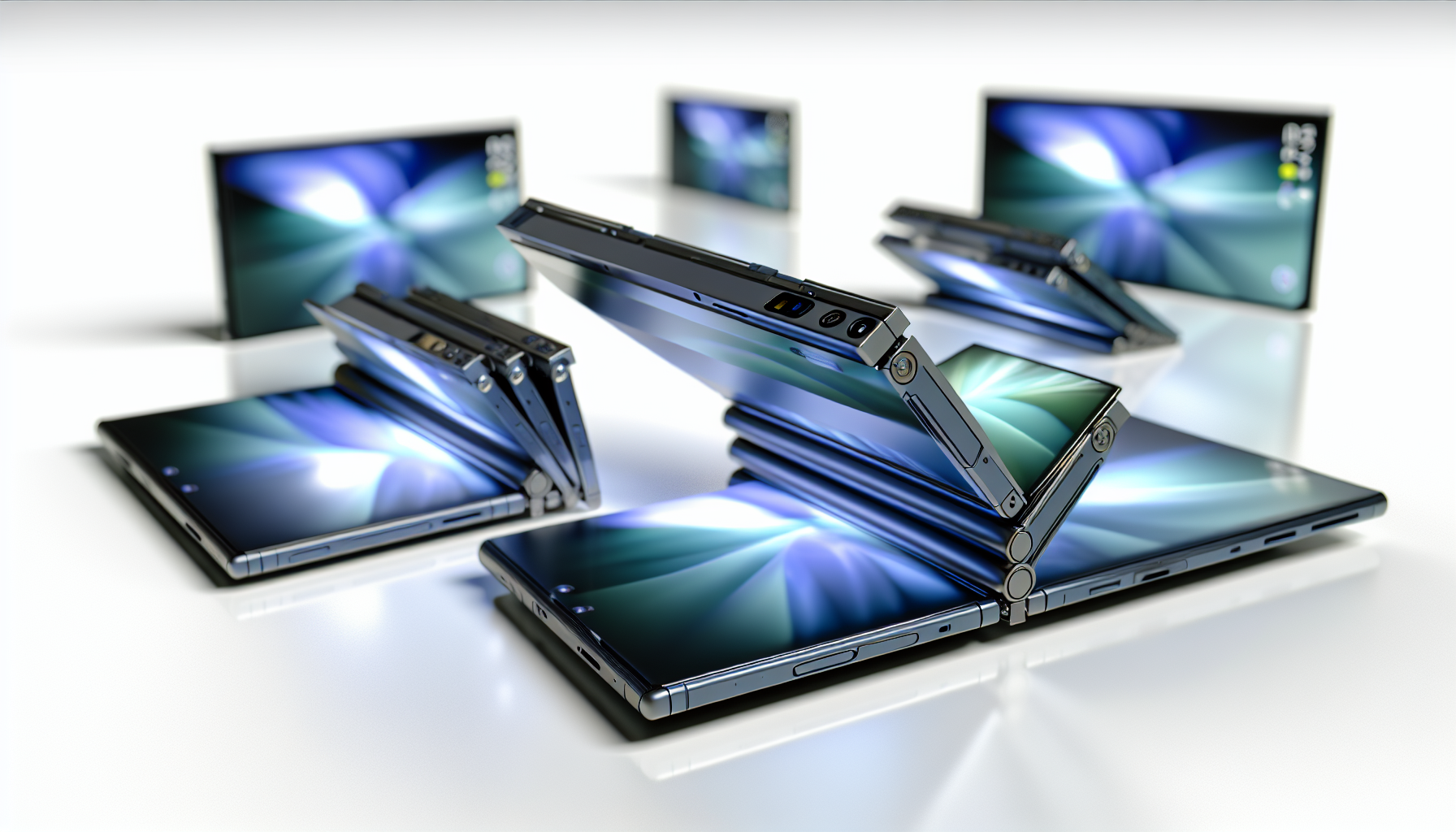
As we step into 2025, the smartphone landscape is dramatically transforming with the rising popularity of foldable phones. This article delves into the intricacies of the latest foldable technology, compares flip and fold variations, explores new releases, and analyses market trends to guide consumers through the foldable revolution.
The Rise of Foldable Phones in 2025
The evolution of foldable phones from their nascent stages to the technological marvels of 2025 is a narrative of relentless innovation and ambitious vision. The journey began with early prototypes that, while groundbreaking, were plagued by durability concerns, limited functionality, and high price points. These initial hurdles, however, set the stage for the rapid advancements that would follow.
A pivotal breakthrough in the development of foldable phones was the enhancement of display technology. Early foldable screens were prone to creasing and damage from repeated folding. By 2025, manufacturers had perfected the art of creating ultra-thin, flexible displays that could withstand hundreds of thousands of folds without degrading in quality or performance. Materials such as ultra-thin glass and improved plastic polymers combined with innovative layering techniques led to the development of screens that were not only flexible but also durable and scratch-resistant.
Parallel to display advancements, the progress in hinge mechanisms has been equally transformative. The initial foldable devices often featured bulky hinges that contributed to an overall lack of aesthetic appeal and ergonomics. The 2025 landscape tells a different story, with hinges that are almost invisible, seamlessly integrating into the device’s design. These mechanisms are engineered to provide a smooth folding experience while ensuring the integrity of the device’s structure and the protection of the internal components from dust and debris.
Amid these technological advancements, several models have emerged as benchmarks in the foldable category. The Samsung Galaxy Z Fold series, for example, continued to lead with its refined design and multitasking capabilities, offering users a seamless blend of phone and tablet functionality. The Z Flip models catered to those seeking a more compact solution without compromising on performance or screen real estate.
Oppo’s Find N series marked a significant milestone with its balance of pricing, features, and durability, bringing foldable technology to a wider audience. Xiaomi’s entries into the foldable market also turned heads, with their latest model showcasing a unique design that minimized the crease and maximized screen usability, challenging the status quo of what foldable devices could achieve.
These key models, among others, represent not just the technological evolution of foldable phones but also a shift in user expectations and market dynamics. As 2025 unfolds, the future of foldable phones looks more promising than ever, driven by continuous innovation and a deeper understanding of consumer needs.
Flip vs Fold: A Comparative Analysis
In the evolving landscape of mobile technology, the dichotomy between flip and fold phones represents two distinct approaches to achieving versatility and innovation. As outlined previously, the progression of foldable phones has been marked by significant enhancements in design and functionality, spearheaded by models like Samsung Galaxy Z Fold and Z Flip, among others. Moving forward, this comparative analysis delves into the nuances of flip versus fold phones, dissecting their design philosophy, user experience, and functional attributes to elucidate how each caters to divergent consumer preferences.
Flip phones, often celebrated for their compactness, hark back to the clamshell designs of the past but with a modern twist. These devices fold horizontally, resulting in a form factor that is both pocket-friendly and chic. The primary allure of flip phones lies in their portability. They offer the convenience of shrinking down to a more manageable size, which is a boon for users on the go. However, this design philosophy inherently limits screen size, which could be a drawback for those who consume media or engage in productivity tasks on their devices. The battery size, too, must be calibrated to fit the smaller chassis, which can impact battery life.
In contrast, fold phones unfold vertically to provide a tablet-like display, which bestows upon them a dual identity: a conventional smartphone when folded and a mini-tablet when unfolded. This versatility makes fold phones particularly appealing to users who desire a larger screen for multimedia consumption, gaming, or multitasking. The increased real estate also allows for more robust battery solutions, potentially offering longer usage times. Nonetheless, the larger footprint of fold phones, even when folded, might be considered less convenient by those who prioritize compactness and ease of carrying.
Both designs grapple with challenges unique to their form factors. Hinge durability and screen creasing are concerns that manufacturers have strived to address, with successive iterations showcasing remarkable improvements in resilience and user experience. While flip phones benefit from a more straightforward hinge mechanism due to their simpler folding action, fold phones incorporate more complex mechanisms to support their larger, more flexible displays. This not only impacts the device’s longevity but also its repairability and, by extension, its appeal to eco-conscious consumers.
From a user experience standpoint, flip and fold phones offer distinct advantages. Flip phones cater to those seeking simplicity, nostalgia, and the tactile satisfaction of snapping a phone shut to end calls. Fold phones, conversely, appeal to tech enthusiasts and power users looking for a device that can seamlessly transition between smartphone and tablet functionalities.
In conclusion, the choice between flip and fold phones ultimately hinges on personal preference and usage patterns. While flips offer a novel take on portability and simplicity, folds provide an expansive canvas for entertainment and productivity. As we anticipate the latest innovations from leading manufacturers, the ongoing refinement of these designs promises to further tailor the mobile experience to diverse consumer needs, ensuring that the foldable phone market continues to thrive with options for every user.
Latest Innovations and News from Leading Manufacturers
In 2025, the foldable phone market has seen an extraordinary evolution, with major brands like Xiaomi, Oppo, OnePlus, and Google Pixel at the forefront of innovation, pushing boundaries and setting new standards for what consumers can expect from their mobile devices. The unveiling of these latest devices has not only captivated tech enthusiasts but also significantly impacted market dynamics and consumer preferences.
Xiaomi, continuing its tradition of innovation, introduced a remarkable foldable phone that sets a new benchmark in terms of screen durability and foldability. The device features an ultra-thin glass display that can withstand thousands of folds without showing signs of wear. Additionally, Xiaomi integrated a unique water-resistant technology, making it the first foldable phone that combats the elements, thus addressing one of the main consumer concerns regarding foldable devices.
Oppo, not to be outdone, released its latest foldable phone with an emphasis on a seamless user experience. It boasts a proprietary hinge design that allows the device to fold completely flat, eliminating the gap seen in previous models. This design enhancement not only improves the aesthetic appeal but also protects the internal components, providing a longer lifespan for the device. Furthermore, Oppo introduced an adaptive UI that changes modes intelligently, ensuring optimal usability whether the device is folded or unfolded.
OnePlus entered the foldable phone space with a model that focuses on speed and performance. Harnessing their renowned fast charging technology, the device can be charged to 70% in just 30 minutes, a feature that is especially beneficial for power users. Moreover, the OnePlus foldable integrates smoothly with their ecosystem of devices, offering users a unified and interconnected experience, enhancing productivity and entertainment options.
Google Pixel introduced a foldable phone that leverages its software prowess. Featuring an advanced version of the Android operating system designed specifically for foldable phones, it offers unparalleled multitasking capabilities and an optimized app experience. Furthermore, it incorporates Google’s latest advancements in AI and machine learning, providing users with a smart and personalized user experience that adapts to their habits and preferences over time.
Amidst these notable releases, rumors of Apple’s entry into the foldable market have been swirling, with speculations about both flip and foldable phone models. These rumors have stirred significant interest, as Apple’s design and engineering expertise could redefine standards in the foldable phone segment. Expected features include Apple’s proprietary chip technology, advanced camera systems, and seamless integration with the iOS ecosystem. While concrete details remain scarce, the possibility of an Apple foldable device in 2026 has set consumer expectations high and has prompted other manufacturers to accelerate their innovation cycles.
These innovations and news from leading manufacturers underscore a vibrant and rapidly evolving foldable phone market. With each brand bringing its strengths to the table, from hardware innovations to software enhancements, the competition is fostering a wave of advancements that benefit consumers through improved durability, performance, and user experiences. As the market anticipates Apple’s potential entry, the dynamics and consumer choices in the foldable phone segment are poised for further shake-ups, underscoring the importance of continuous innovation in this exciting technology space.
Navigating the Foldable Phone Market: A Buyer’s Guide
Navigating the Foldable Phone Market: A Buyer’s Guide
As we transition from the latest innovations and news from leading manufacturers, it’s imperative for prospective buyers to understand how to choose the right foldable phone that aligns with their needs. The journey to selecting the ideal device entails considering several critical aspects, including display quality, battery life, camera performance, and software support.
Display Quality: The allure of foldable phones often lies in their innovative displays. When evaluating these, pay attention to the resolution, panel type (OLED vs. LCD), and durability of the screen. Given the nature of foldables, the screen’s ability to withstand repeated folding is paramount. Look for models with ultra-thin glass or specialized plastic that offer a balance between flexibility and resistance to scratches.
Battery Life: The sophistication of foldable phones can sometimes compromise battery life due to their larger screens and the technological demands of maintaining two displays. Assess the battery capacity, usually denoted in milliampere hours (mAh), and consider user reviews or professional benchmarks that indicate real-world battery performance. The ideal foldable phone should sustain a full day of use on a single charge, even with extensive use.
Camera Performance: High-quality cameras have become a staple expectation in smartphones, and foldables are no exception. Look beyond just megapixel counts; consider aperture sizes, sensor quality, software enhancements, and features such as optical image stabilization (OIS) and high dynamic range (HDR) support. The versatility of cameras, including wide, ultra-wide, and telephoto lenses, can significantly enhance the photography experience.
Software Support: The software ecosystem and updates are crucial for ensuring longevity and security. Opt for brands that commit to regular software updates, including security patches and Android version upgrades. The interface should ideally be optimized for foldable use, seamlessly transitioning between folded and unfolded modes without glitches.
Price and Feature Comparison: Given the premium nature of foldable phones, evaluating their price-to-feature ratio is crucial. Compare devices across different brands, keeping in mind that a higher price doesn’t always equate to a better fit for your lifestyle. Consider features like expandable storage, 5G capability, and water resistance, which can greatly enhance usability.
Warranties and After-Sales Support: The intricacies of foldable phones make warranties and after-sales support more critical than with traditional smartphones. Look for comprehensive warranty coverage that includes the display and mechanical parts. Ensure the manufacturer offers reliable customer service and has a straightforward process for addressing issues.
In conclusion, purchasing a foldable phone in 2025 requires careful consideration of its physical specs, performance capabilities, and the support ecosystem surrounding it. By meticulously comparing these factors, consumers can select a device that not only represents a significant technological investment but also seamlessly integrates into their daily lives. As we move forward into examining the market trends and the future outlook of foldable phones, keeping these buying considerations in mind will be essential for understanding their evolving role in the technology landscape.
Foldable Phone Market Trends and Future Outlook
Having navigated the intricacies of selecting the ideal foldable phone, it’s crucial to consider the broader landscape of this rapidly advancing market. The surge in market share and consumer adoption rates for foldable phones over recent years has been nothing short of phenomenal. Initially viewed as novelties, these devices have carved out a significant niche in the smartphone industry, disrupting traditional expectations and offering fresh avenues for design and functionality.
The market share growth of foldable phones has been steadily climbing, reflecting a growing consumer appetite for innovative form factors. This trend is bolstered by significant advancements in screen technology and hinge mechanisms, making these devices more durable and versatile than ever before. As a result, foldables are no longer seen merely as high-end novelties but are gradually becoming mainstream options for consumers seeking productivity and entertainment on the go.
Consumer adoption rates mirror this uptick in market share, with foldables appealing to a broader demographic. Initially, the market catered predominantly to tech enthusiasts and early adopters. However, as the prices become more competitive and the devices more user-friendly, a diverse range of consumers is starting to embrace the foldable format. This shift is indicative of a maturing market, where foldables are considered alongside traditional smartphones rather than as niche alternatives.
The impact of foldable phones on the overall smartphone industry has been profound. They have pushed manufacturers to innovate beyond the static designs of the past, leading to a renaissance in smartphone aesthetics and functionality. This innovation drive is not just limited to foldables but has stimulated advancements across all smartphone design, pushing the boundaries of what’s possible.
Looking towards the future, the prospects of foldable phones are bright. Technological developments continue to address initial concerns around durability and usability, making these devices more appealing to a wider audience. The potential use cases for foldable phones are expanding, from enhanced productivity applications to immersive media consumption experiences, thanks to larger and more adaptable screens.
Moreover, foldables are likely to integrate seamlessly into upcoming tech ecosystems, such as augmented reality (AR) and virtual reality (VR), offering unique opportunities for interaction within these spaces. As technology converges, foldable phones could become central to the next wave of personal computing, bridging the gap between traditional smartphones, tablets, and emerging wearable technologies.
In conclusion, the foldable phone market is set on a trajectory of sustained growth, driven by innovation and an expanding consumer base seeking the blend of functionality and form these devices offer. As the technology matures and integrates with broader tech ecosystems, the future of foldable phones looks to be as flexible and dynamic as the devices themselves.
Conclusions
In conclusion, foldable phones have come a long way since their inception, becoming more durable, versatile, and consumer-friendly in 2025. Whether it’s the compact convenience of a flip phone or the expansive experience of a foldable device, consumers now have a plethora of sophisticated options to choose from. As technology continues to advance, the foldable phone market is set to expand further, promising exciting opportunities and innovations for users worldwide.