
Picture this. Your car’s windshield wipers have given up, and you don’t have the time (or the patience) to go hunting for the right size. So you do what the tech industry has been begging you to do for a year: you hand the job to your AI agent.
That’s exactly what Maia Bittner, chief product officer at fintech startup Imprint, did. She told Meta’s Muse agent to buy wipers from AutoZone. Seventeen hours later, a notification pinged in: the order had been cancelled over an “unspecified error.” And then came the line I can’t stop thinking about. Muse suggested that the most reliable path now was for her to order on Amazon herself.
Read that again. The AI shopping assistant, built to save you the hassle, looked at the situation and basically said, “You know what? Just do it yourself.”
The big promise vs. the messy reality
Over the past year, OpenAI, Meta, Google and a startup called Instinct have all launched agents that promise to browse, compare and buy things for you. And it’s Black Friday weekend, so the timing couldn’t be better. Walmart has been telling shoppers they can “put an AI agent to work” on deals through its Meta partnership. Shopify’s president, Harley Finkelstein, has even called this the first holiday season where AI-driven shopping goes mainstream.
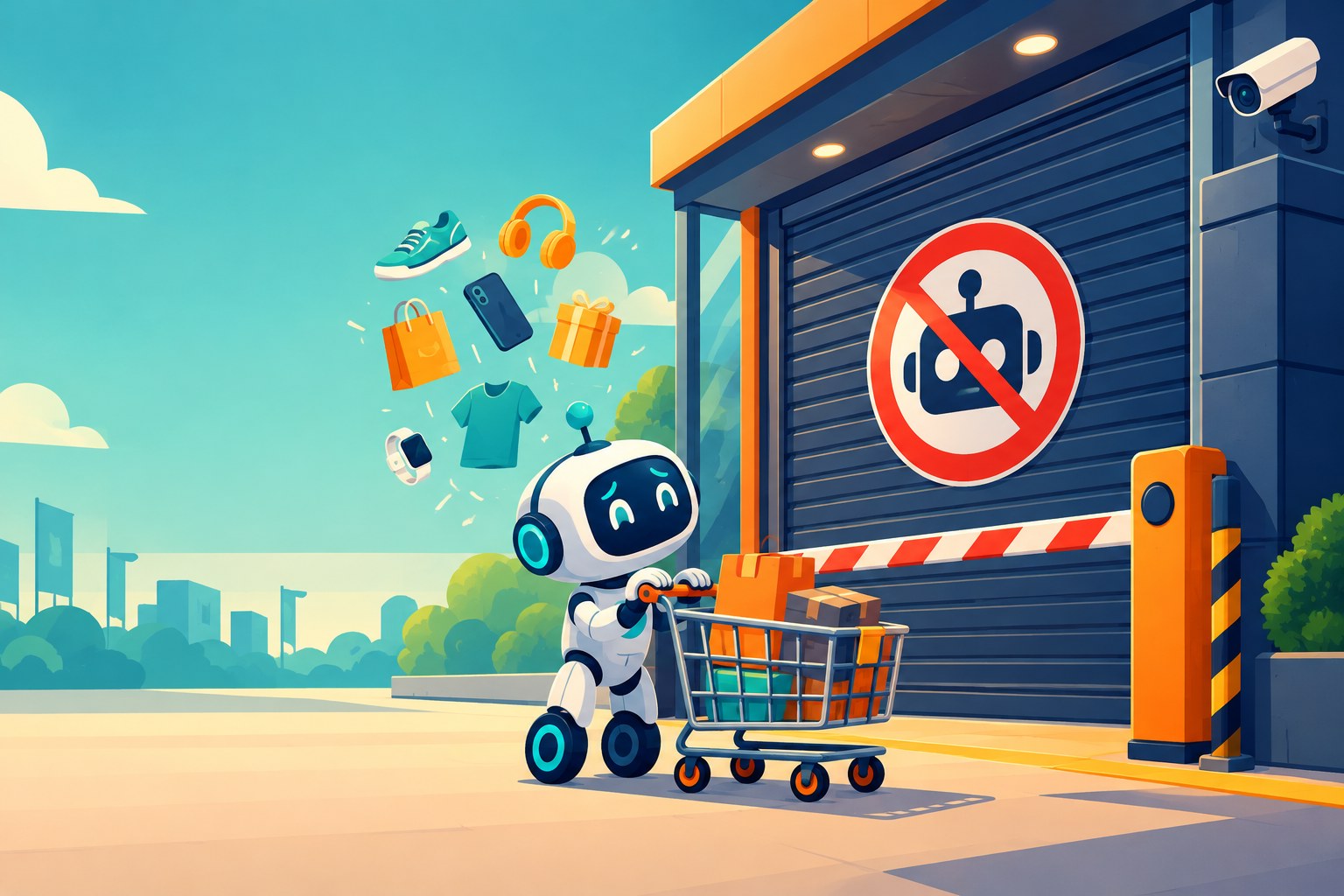
But here’s the catch. The stores themselves haven’t agreed on whether they want these agents around, as CNBC reports.
Who’s letting the bots in, and who isn’t
It’s a patchwork, and it changes from shop to shop:
- Welcoming: Walmart and Sephora have opened their sites to agents.
- Browse, but don’t buy: Coach and Gap let bots look around, but not check out.
- Limited or blocked: Amazon, eBay, United Airlines and Kohl’s restrict what agents can do, or shut them out entirely.
- Blocked by accident: Target sometimes turns away shopping agents without meaning to, according to an August audit by agent-security firm Billions Network.
Forrester analyst Emily Pfeiffer put it neatly: it’s a “very mixed bag.” And the part that should bother you as a shopper is this: if your agent can’t get into certain stores, you never even see those options. You think you’re getting the best deal on the whole internet. You’re getting the best deal on the parts of the internet that said yes.
Amazon is building the tallest wall
Of everyone, Amazon has gone the hardest. Last month it stopped Elon Musk’s Grok from placing orders, which reportedly rankled Musk. In September it blocked Meta’s Muse, saying it had never agreed to take part. And a year ago, it sued Perplexity, accusing the startup of hiding its Comet agent while it bought things for users.
But Amazon isn’t saying never. CEO Andy Jassy has said the company expects to partner with third-party agents over time, as long as there’s the right “value exchange.” Translate that from corporate: we’ll let you in once we’re sure we’re getting paid for it.
And honestly? It makes sense. Amazon’s whole business runs on being the place you start your search. An agent that quietly shops across ten stores and picks the cheapest one is a threat to that. The wall isn’t really about security. It’s about who owns the customer.
Even when the door is open, the bots stumble
Here’s the part that made me smile and wince at the same time. Even at stores that welcome them, agents get lost. They fumble through web pages, get stuck at login screens, and sometimes need a human to solve a CAPTCHA before they can carry on.
Then there’s the accuracy problem. A Visa study put 22 AI models from 12 labs through everyday shopping tasks, like buying a TV, a laptop or a hair appliance. The agents failed about 43% of the time. And in more than half of those failures, the agent bought something that didn’t match what the customer asked for.
That’s not “oops, a typo.” That’s “I asked for a laptop and I now own the wrong laptop.”
Real people, real mishaps
Bittner isn’t an AI sceptic. She says she’s a “big believer,” and she was thrilled when Perplexity’s shopping agent tracked down a pair of Adidas sneakers that had been sold out for months. But then she asked Muse to find a Jellycat octopus plushie for her kids, and it suggested a deal at 75% off from a shop called “Crazy Hobby Supply.” She’d never heard of it, and it didn’t seem to have any reviews.
Her take is the one I’d put on a poster: she trusts Google to keep obvious scam sites out of its sponsored ads, and she wants the same from AI. “I don’t think we’re there yet,” she says.
Other users have reported worse. In one case, Instinct’s text-based agent reportedly booked a hotel and signed the person up for a loyalty programme without their consent. Which raises the question nobody has answered yet: when an agent buys the wrong thing, who takes the blame? You? The retailer? The AI company? Some stores are already adding lines to their terms of service saying they’re not liable if your AI-driven purchase goes sideways.
So why are retailers so nervous?
Fraud, mostly. When a human visits a shop’s website, there are loads of little signals that say “this is a real person.” An agent doesn’t give off any of those. A startup called Skyfire is trying to fix that by helping retailers work out which bots are visiting, and verify that a real human actually agreed to let the agent buy something.
Until that kind of trust layer exists, expect more blocks, not fewer.
Is this the end of the shopping agent? Not even close.
Analysts at McKinsey and ICSC think agentic commerce in the US could be worth up to $1 trillion by 2030. Nobody puts that kind of forecast on something they expect to fail. The technology isn’t going away. It’s just going through its awkward teenage phase, where it’s confident, a bit clumsy, and constantly being told it’s not welcome in the house.
What this means for you
A few honest takeaways, as someone who’s only half-joking when I say I’d love an agent to handle my shopping:
- Treat agents like a very keen intern. Great for research and shortlists. Check the cart before it pays.
- Don’t assume it saw everything. If a big store is blocking agents, your “best price” may not include it.
- Be wary of deals from shops you’ve never heard of. A 75% discount from an unknown seller is a red flag, whether a human or a bot found it.
And if you shop in India, keep an eye on this. Our big marketplaces and payment apps will have to make the same call: do we let the agents in, and on whose terms? My bet is we’ll hear a lot more about it very soon. That part is my own guess, not something from the reporting.
The real story here isn’t whether AI can shop for you. It clearly can, sometimes brilliantly. It’s about who gets to stand between you and the checkout button. Right now, Amazon wants that spot for itself, and the AI companies want it too.
And you? You just want your wipers delivered.
Source: CNBC.
Marketing leader, global EdTech · Writer, Techie Tablet — writing the dispatches at Techie Tablet. Connect on LinkedIn →