
Okay, real talk for a second. When I first saw the tweet from Astrobase this morning, my reaction was… skepticism. “India’s first full-flow staged combustion rocket engine.” Sure, buddy. Every other week some startup claims a world first these days, and half of them turn out to be a Keynote deck and a dream.
Then I actually read the thread. Then the articles. Then I went down a two-hour rabbit hole about turbopumps and pre-burners at midnight, which is not something I had on today’s to-do list. But here’s the thing — this one is real. Properly, genuinely real. And it’s a much bigger deal than even the headline makes it sound.
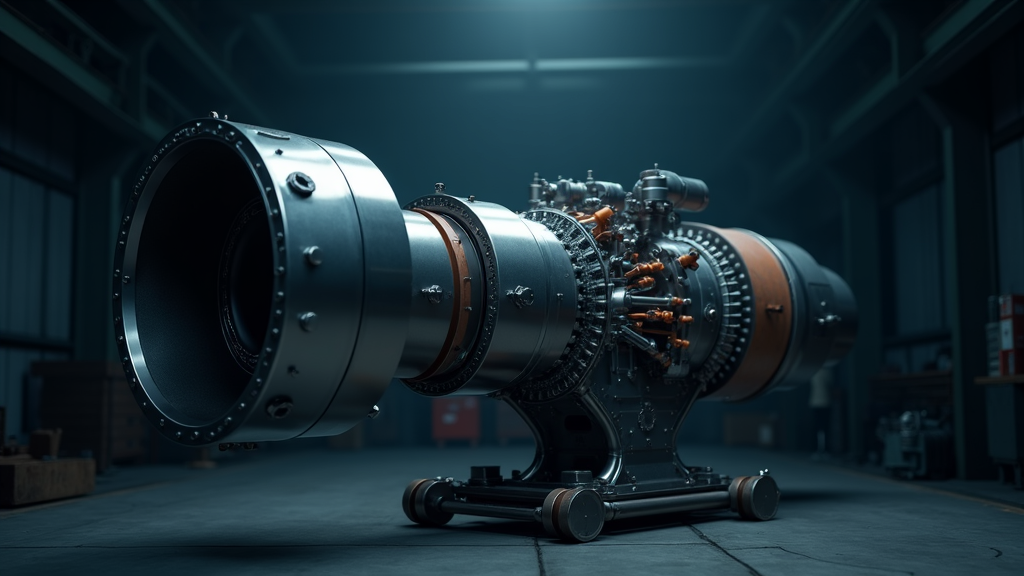
(Photo: Not the actual image, shared for reference only)
What exactly did Astrobase just pull off?
Astrobase Space Technologies is a Bengaluru startup, founded in 2024 — so it’s barely two years old. On August 7, it unveiled Everest, an 80-tonne-class full-flow staged combustion rocket engine that produces roughly 800 kilonewtons of thrust in space. That’s about the force needed to lift 80 tonnes. It runs on liquid oxygen and liquid methane — the same methalox combo that powers SpaceX’s Raptor.
And it’s not a render, not a mockup, not a “concept.” The company says the engine is fully integrated and ready for testing. Designed and manufactured entirely in India.
Why “full-flow staged combustion” is such a flex
Rocket engines come in difficulty tiers, like video game levels. Most engines in the world sit in the easy-to-medium bracket. Full-flow staged combustion is the final boss.
The simple version: in an FFSC engine, both the fuel and the oxidiser run through their own pre-burners before hitting the main chamber. That sounds like plumbing trivia, but it’s what lets an engine reach extreme chamber pressures — over 300 bar — which is exactly what you need for an engine that can be reused hundreds of times.
Here’s the perspective that made me sit up: the only full-flow staged combustion rocket engine that has ever flown on an actual launch vehicle is SpaceX’s Raptor. That’s the entire list. Nobody else has done it operationally. If Astrobase’s hot-fire tests go well, India becomes only the fourth country — after the Soviet Union, the US, and China — to test an FFSC engine. And Astrobase becomes just the eighth entity on the planet to get there.
Not bad for a company that didn’t exist when ChatGPT was still the new shiny thing.
The founders are an odd couple – and that’s a good thing
Astrobase was started by two people from completely different worlds:
- Devakumar Thammisetty — a former ISRO propulsion engineer. He knows exactly how brutally hard this stuff is to build.
- Neeraj Khandelwal — co-founder of CoinDCX. He knows exactly how hard it is to raise money and keep a company alive.
That combination — deep rocket science pedigree plus startup hustle — is pretty much the exact recipe India’s private space sector has been waiting for. And the infrastructure backs up the ambition: a 21.5-acre test facility in Anantapur, Andhra Pradesh that can handle thrust up to 200 tonnes, plus a 46,000 sq ft assembly plant in Bengaluru with India’s largest industrial metal 3D printer, which is how they’re building Everest’s most intricate parts.
The receipts: this wasn’t overnight
What I like about Astrobase is that they’ve been quietly checking boxes for a year:
- September 2025 — sub-scale hot-fire tests completed
- January 2026 — high-speed turbopump trials done
- June 2026 — picked by IN-SPACe’s Technology Adoption Fund (one of just 3 firms selected from 43 applicants, support capped at Rs 25 crore)
- Later this year — full-scale hot-fire tests of Everest itself
So this unveiling isn’t a leap into the unknown. It’s the middle of a very deliberate, very public roadmap.
Why this matters for India right now
Timing is everything here. Barely three weeks ago, Skyroot Aerospace’s Vikram-1 became India’s first privately developed rocket to reach orbit. And now this. India’s private space sector just went from “promising” to “actually happening” in the span of a single month.
Astrobase’s plan is to cluster seven Everest engines under a partially reusable rocket and reach orbit by 2029. The longer-term ambition? Pushing launch costs toward $300 per kilogram in the 2030s. That’s the kind of number that unlocks entirely new industries — mega-constellations, in-space manufacturing, things we haven’t even named yet.
And IN-SPACe’s chairman said this week that India should have three commercial small launch vehicles by the end of 2027. The gap between “the government does space” and “startups do space” is closing fast — engines like Everest are exactly why.
The take
For years, “Indian startup” and “rocket engine” in the same sentence meant a funding deck. Now it means a fully integrated, 80-tonne-class, Starship-grade engine built in Bengaluru — with a test facility in Andhra Pradesh and a 2029 orbit target.
India went from zero private orbital launches to a functioning private rocket and its first full-flow rocket engine within a single month. That’s not a trendline. That’s a gear shift.
So here’s my question for you: when Everest does fire for real — what’s the first thing you’d want India’s reusable rocket to carry?
Sources: India Today, Swarajya, Astrobase on X, IN-SPACe disclosures
Marketing leader, global EdTech · Writer, Techie Tablet — writing the dispatches at Techie Tablet. Connect on LinkedIn →